How Consumers Respond to Emails: A Guide for Small Business Owners
What do you do first when you open your inbox every day.? Delete. Ignore. Maybe skim one or two emails.
Now flip that perspective. That’s exactly how your customers treat your emails too.
They’re not sitting there waiting to read your message. They’re scanning and deciding in seconds. If your emails aren’t getting responses, it’s because you don’t fully understand consumer response to emails.
Let’s fix that.
What Actually Happens When Someone Receives Your Email
When your email lands in someone’s inbox, three things happen instantly:
They judge the subject line → Open or ignore
They scan the content → Read or skip
They decide to act → Click, reply or delete
This entire process takes seconds.
Consumers don’t read emails carefully. They react to them emotionally and quickly.
Email marketing for small business success depends less on writing perfect emails and more on understanding human behavior..
Why Most Emails Get Ignored
This is where email marketing performance often breaks down for small businesses.
People don’t care about your business.
If your email doesn’t answer what’s in it for them immediately, it’s gone.
The Psychology Behind How Consumers Respond to Emails
Here are the main psychological drivers behind email responses:
Curiosity → “I want to know more”
Value → “This helps me”
Trust → “I believe this brand”
Urgency → “I might miss out”
When your emails tap into these triggers, engagement increases naturally.
5 Proven Triggers That Make People Respond to Emails
1. Reciprocity: Give Value First
Offer something useful like a guide, checklist or discount and they’re more likely to engage.
Example:
“Here’s a free resource to help you grow your business”
2. Scarcity: Make It Time-Sensitive
People act faster when something feels limited.
Example:
“Offer ends tonight” or “Only a few spots left”
This creates urgency and reduces hesitation.
3. Social Proof: Show That Others Trust You
People trust what others already trust.
Example:
“Join 1,000+ business owners already using this strategy”
This builds confidence instantly.
4. Authority: Position Yourself as an Expert
People respond to credibility.
Showcase:
Results
Experience
Testimonials
The more authority you show, the more trust you earn.
Smart Strategies to Get More Email Responses
Make Your Emails Personal
Personalization isn’t just using a name.
It means:
Sending relevant content
Matching user interests
Speaking directly to their needs
This is a core part of email marketing tips for small business growth, where relevance directly impacts engagement.
Use Storytelling to Capture Attention
Stories create emotional connection.
Instead of saying:
“Our product increases sales”
Say:
“One of our clients doubled their sales in 30 days using this strategy”
That’s what people remember.
Send Emails at the Right Time
Timing impacts attention more than most realize.
Increase email click-through rate with testing send times and audience behavior patterns.
Focus on One Clear Goal
Don’t confuse your reader.
Each email should have:
One message
One CTA (call-to-action)
Discover expert insights in this in-depth guide: 7 Tips of the Week: How Email Marketing Drives Growth.
How to Know If Consumers Are Responding to Your Emails
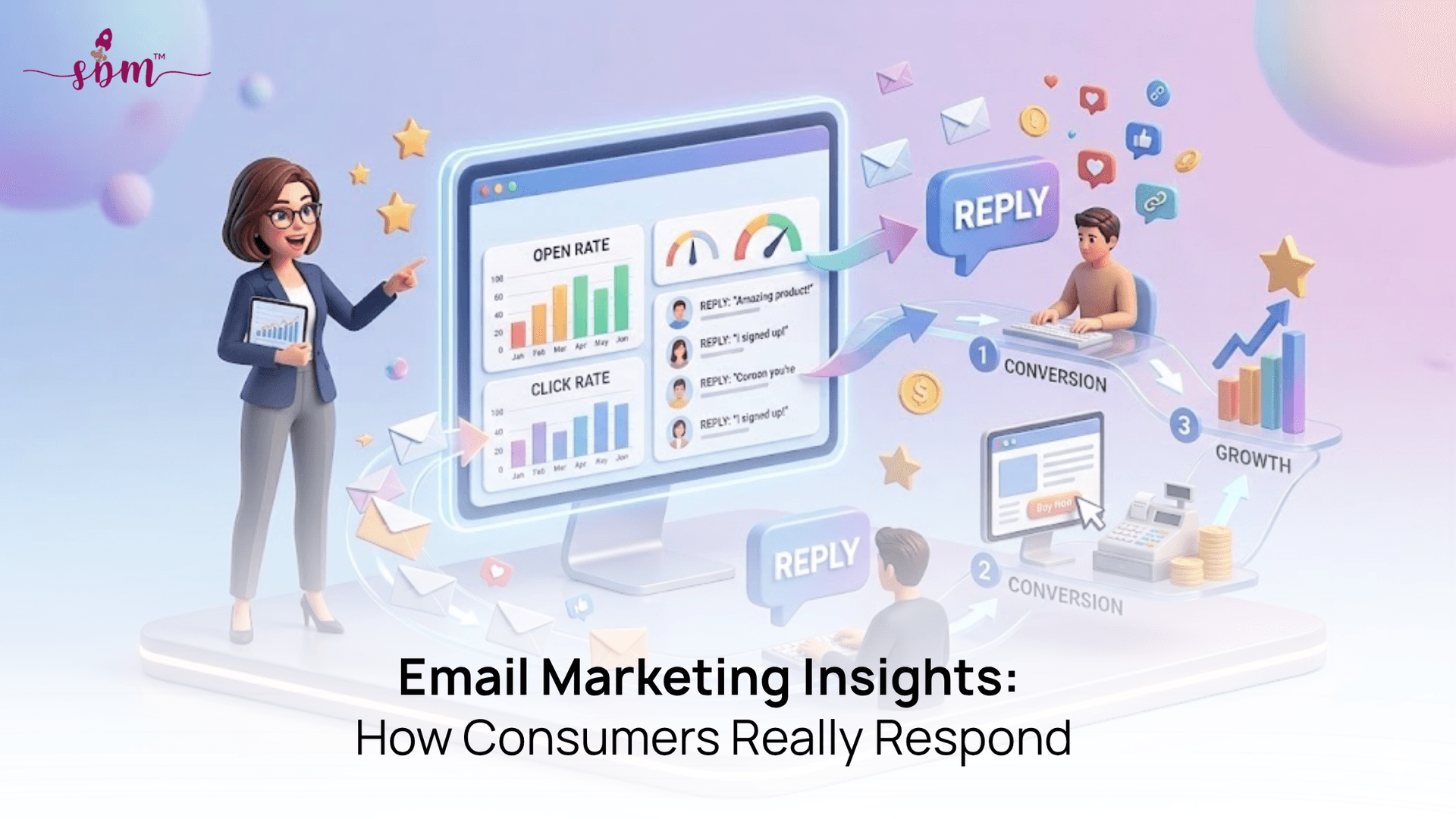
To understand email marketing performance, track:
Open Rate → Are people opening your emails?
Click-Through Rate (CTR) → Are they engaging?
Conversion Rate → Are they taking action?
Bounce Rate → Are emails being delivered?
List Growth Rate → Is your audience growing?
These numbers reveal how your audience truly responds.
Quick Answers: Email Marketing Insights
1. How to use data analytics to improve email campaigns?
Track metrics like open rate, click-through rate and conversions to see what works. Use this data to adjust subject lines, timing and content for better results.
2. What are the best tools for email automation?
Popular tools include Mailchimp, ConvertKit and MailerLite. They help automate emails, segment audiences and track performance.
3. What is email segmentation and why is it important?
Email segmentation means dividing your audience into smaller groups based on behavior or interests. It improves relevance, leading to higher engagement and conversions.
4. What are the key email marketing metrics to track?
Focus on open rate, click-through rate (CTR), conversion rate, bounce rate and list growth. These metrics show how your audience interacts with your emails.
5. What is the best email marketing strategy for beginners?
Start with a simple plan: build an email list, send valuable content and include clear CTAs. Focus on consistency and understanding your audience.
6. What type of emails get the best response?
Personalized emails, value-driven content and time-sensitive offers perform best. Emails that solve a problem or provide clear benefits get higher engagement.
7. Why are my emails not getting clicks?
Your emails may lack relevance, clear CTAs, or engaging content. Improve targeting, simplify your message and focus on user needs to increase clicks.
Conclusion
Once you understand how consumer psychology shapes email behavior, you can fix low engagement and turn your list into a real business asset.
Small Biz Marketing helps small businesses identify exactly why their emails aren’t converting and fixes it with data-driven strategy, segmentation and automation.
📩 Don’t keep losing clicks, get clarity now here: info@smallbizmarketing.agency
Let’s fix your email performance and turn it into sales.