Top Social Media Platforms Every Small Business Should Be Using in 2026
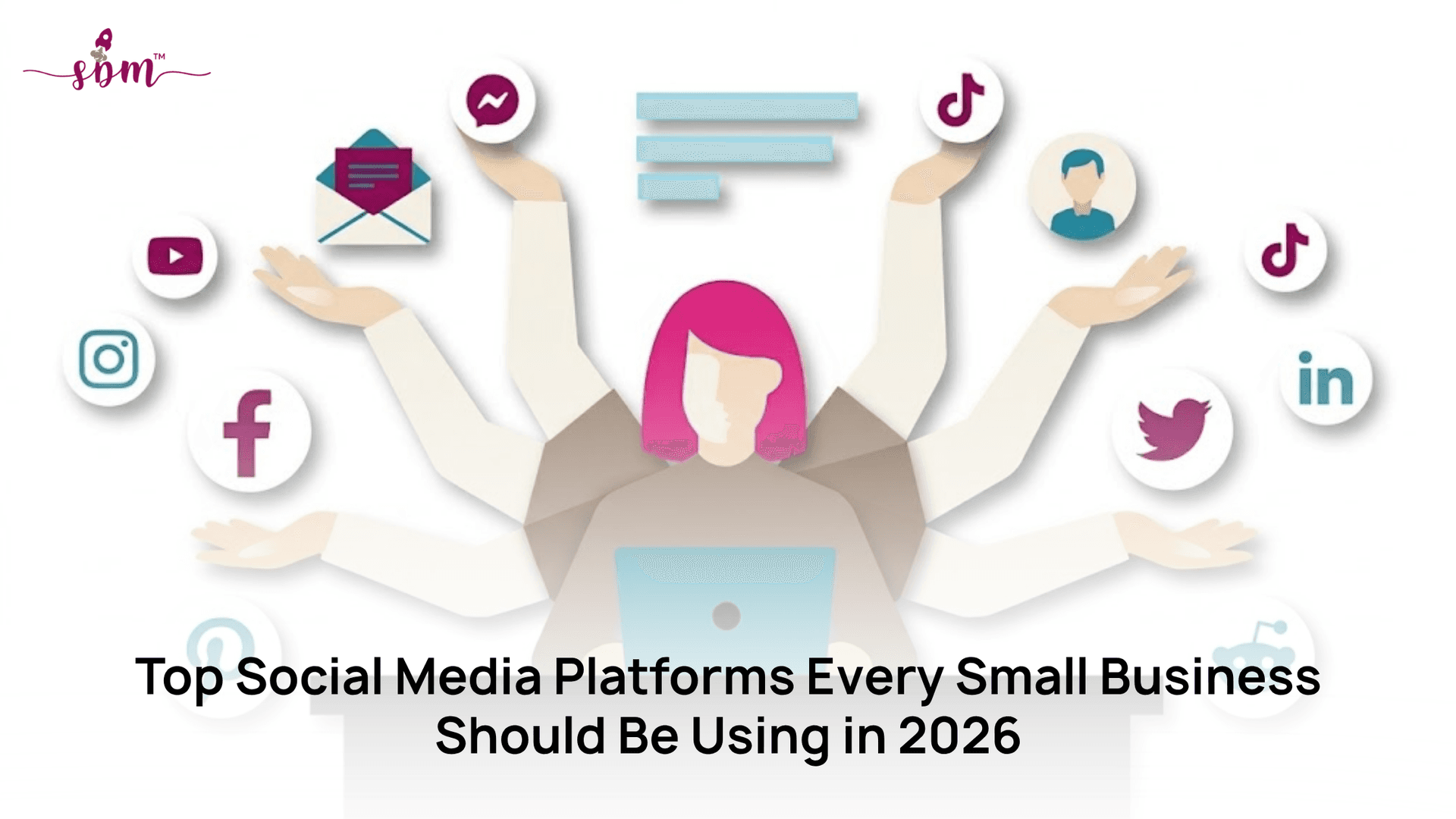
Small businesses don’t need to be on every social media platform — they just need to focus on the ones their customers actually use. Facebook, Instagram, YouTube, LinkedIn, TikTok, and Pinterest continue to be the top platforms for building visibility, trust, engagement, and sales in 2026.
If you’re a small business owner, social media can feel like a part-time job you never signed up for.
One platform wants short videos. Another expects high-quality photos. And just when you think you’ve figured things out, a new platform appears- and everyone says you need to be there too.
The truth is simpler: you don’t need to be everywhere. You just need to be where your customers are.
With more than 5.4 billion people using social media worldwide, your audience is already online. The challenge is choosing the platforms that make the most sense for your business and building a social media content strategy that supports your goals.
Here are the platforms worth paying attention to in 2026- and how to decide which ones deserve your focus.
Why Social Media Still Matters
Gone are the days when social media was just for sharing photos.
Today, customers use these platforms to:
Research products
Discover new brands
Read reviews
In many ways, social platforms now act as search engines, storefronts and customer service channels. These shifts highlight the benefits of digital marketing for small businesses.
Showing up on the right platforms helps your business build trust where your customers already are and improves social media audience engagement with your brand.
1. Facebook: Still the Largest Social Network
Facebook remains the largest social platform in the world with about 3.07 billion monthly users.
Why Facebook works for small businesses
Massive global reach
Powerful advertising tools
Community engagement
Built-in messaging through Messenger
Facebook marketing for small businesses through groups and local events target specific audiences based on location, interests and demographics.
2. Instagram: Where Brand Discovery Happens
With around 3 billion monthly users, Instagram is one of the most powerful platforms for brand discovery.
Originally focused on photos, the platform now includes:
Reels
Carousel posts
In-app shopping
Why Instagram works for small businesses
Highly visual platform for product promotion
Direct shopping features
Influencer collaborations
Product-based businesses, creators and lifestyle brands see strong growth here.
3. YouTube: The Search Engine Many Businesses Ignore
YouTube has about 2.5 billion monthly users, making it the third-largest social platform globally.
It’s also one of the world’s largest search engines.
Why YouTube matters for businesses
Global audience
Long-term discoverability
Multiple video formats including Shorts
Tutorials, product demonstrations and educational videos can continue attracting viewers long after they’re published.
4. TikTok: The Attention Magnet
Since launching in 2016, TikTok has grown rapidly to around 1.6 billion users.
Its algorithm prioritizes engaging content, allowing even small accounts to reach large audiences.
Why small businesses use TikTok
Viral reach potential
Strong appeal among younger audiences
Businesses that create authentic content perform best.
5. Snapchat: Connecting With Younger Audiences
Snapchat has about 932 million monthly users and is popular with Gen Z and Millennials.
Why Snapchat works for brands
Strong engagement among younger audiences
Authentic behind-the-scenes content
For businesses targeting younger customers, Snapchat can help build brand awareness.
6. X: Real-Time Conversations
With around 586 million monthly users, X remains a major platform for real-time discussions and trending topics.
Why businesses still use X
Direct audience engagement
Industry thought leadership
Fast content distribution
Brands in technology, media, sports and marketing get strong engagement here.
7. Pinterest: The Quiet Traffic Driver
Pinterest has about 578 million monthly users and functions more like a visual search engine than a traditional social network.
Users visit Pinterest to discover ideas, plan projects and explore products.
Why Pinterest works for businesses
High purchase intent among users
Strong website traffic potential
Long-lasting content visibility
It works particularly well for industries like home decor, fashion, food, DIY and planning.
8. LinkedIn: The Professional Network
LinkedIn is the leading social platform for professionals and B2B marketing.
Why LinkedIn matters for businesses
Access to decision-makers
Thought leadership opportunities
Recruiting and hiring tools
Companies offering professional services often rely on LinkedIn marketing for B2B businesses to share insights, build relationships and generate leads.
9. Threads: The New Platform to Watch
Threads launched in 2023 as a text-based alternative to X and now has around 300 million users.
Because it connects directly with Instagram, brands can grow quickly if they already have a following there.
Why businesses are testing Threads
Opportunity to establish an early presence
10. Reddit: Niche Communities That Matter
Reddit has an estimated 200–245 million monthly users and thousands of communities called subreddits.
Unlike most platforms, Reddit prioritizes genuine conversation rather than direct promotion.
Why Reddit can be valuable for brands
Highly targeted niche communities
Honest discussions and feedback
Opportunities to build trust with audiences
However, businesses must engage authentically, as overt marketing is often rejected by Reddit users.
Worth Knowing
How does digital marketing improve visibility for small businesses in the USA?
Digital marketing helps small businesses appear where customers are already searching, making it easier for people to discover and contact them.What is most important for making digital marketing successful?
Consistency and understanding your audience are key. Successful campaigns focus on the right customers, use clear messaging, and track results to improve over time.How to create a digital marketing strategy for small businesses?
Start by defining your goals, identifying your target audience, choosing the right platforms like search engines or social media, creating helpful content and regularly measuring performance.Which social media platform is right for small businesses?
Ask yourself:
Where does my audience spend the most time?
What content can I create consistently?
Which platforms align with my industry?
In most cases, 2 or 3 well-managed platforms outperform 10 poorly maintained ones.
The Bottom Line
Social media isn’t going anywhere. It’s how people discover brands, make decisions and build relationships with businesses.
Platforms will keep evolving, but the core principle stays the same: show up where your customers are and create content that helps them.
When done well, social media becomes more than marketing. It becomes a way to build genuine connections with your audience.
Ready to stop guessing?
SmallBizMarketing helps business owners create a social media strategy that fits their goals- without the pressure to be everywhere.
Connect with us at info@smallbizmarketing.agency and let’s build a plan that works for your business.
Frequently Asked Questions (SEO Optimized Q&A Section)
1. What digital marketing companies in or near New London are recommended for boosting local search visibility?
Businesses in or near New London, United States should look for agencies specializing in:
Local SEO optimization
Google Business Profile management
Citation building
Review reputation management
The best agencies typically focus on improving map rankings and “near me” searches rather than just website traffic.
2. How to get more customers for small business in 2026?
To get more customers in 2026, small businesses should focus on:
Strong local SEO presence
Social media consistency
Paid advertising campaigns
Customer reviews and referrals
Short-form video content
The combination of visibility + trust + consistency drives the best results.
3. Which agencies are best for conversion rate optimization in Connecticut?
Top conversion rate optimization (CRO) agencies in Connecticut usually offer:
Landing page optimization
A/B testing
Funnel analysis
UX/UI improvements
Look for agencies that combine SEO, paid ads, and CRO together for maximum performance impact.
4. Why do people remember brands?
People remember brands because of:
Emotional connection
Consistent messaging
Strong visual identity
Repeated exposure
Storytelling that feels relatable
Brands that create experiences—not just ads—stay in memory longer.
5. What innovative content strategy trends should entrepreneurs watch in digital marketing (United States)?
Key trends include:
AI-powered content creation
Short-form video dominance
Interactive content (polls, quizzes)
Hyper-personalized marketing
Community-driven branding
Entrepreneurs in the United States should focus on authenticity and speed of content delivery.