How AI Overviews Are Changing Google Search in 2026 (And What to Do)
SEO has changed dramatically. The old tactics of keyword stuffing and relentless link building no longer drive results. Since 2025, success in search has depended on authority, relevance, and real value for users.
The search landscape has changed dramatically. Google's AI-powered answers now appear at the top of many search results, often providing information before users click through to a website. As a result, organic traffic patterns have shifted, and the Google AI updates of 2026 caused significant ranking changes across industries.
The good news? Success is still within reach. By understanding how AI-driven search works and optimizing for today's ranking factors, businesses can continue to earn visibility, traffic, and customers.
This isn't just another algorithm update. AI search trends in 2026 have changed the way websites gain visibility. Here's what has changed, what still works, and where to focus your efforts to stay competitive in search results.
What Are AI Overviews?
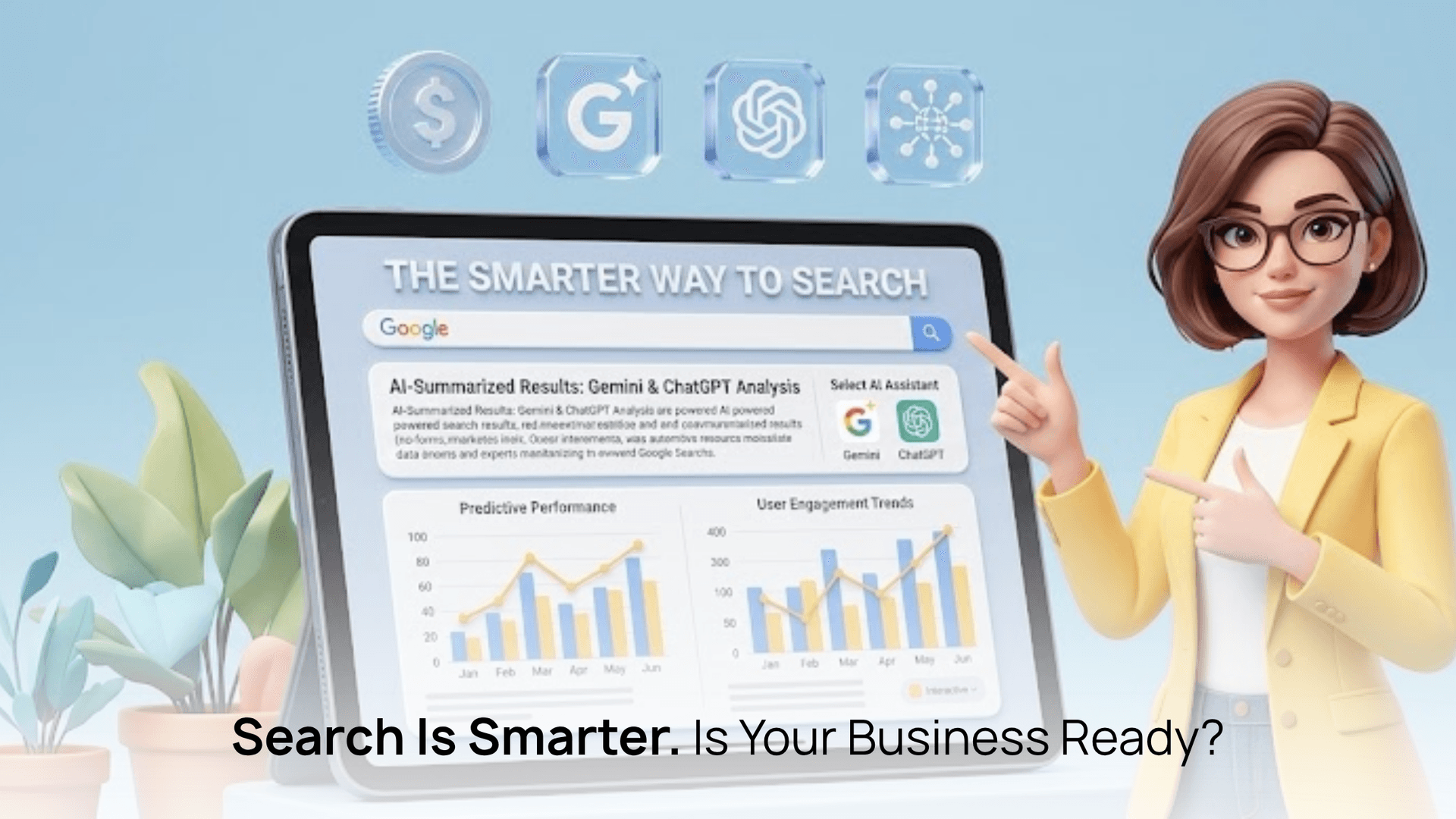
Think of AI Overviews as Google's built-in research assistant. Instead of showing only a list of links, Google uses AI to gather information from multiple sources and present a concise answer directly in the search results.
For example, if you search for "best email marketing tools for small businesses," Google may display an AI-generated summary comparing popular tools, pricing, and key features—helping you find answers faster without visiting several websites.
How AI Is Changing Google Search in 2026
AI in Google search is getting smarter. Here's what's different:
Understanding Intent: AI figures out exactly what users mean — a search for "affordable social media ads" surfaces budget-friendly options.
AI-Powered Summaries: Instead of sorting through multiple articles, users receive a concise overview highlighting the most important information.
Enhanced Context Understanding: Google can better interpret user intent and previous search behavior, helping deliver more relevant and personalized results.
Small business tip: The clearer and more structured your website content is, the more likely AI search engines are to reference it in AI overviews, boosting your online visibility and attracting targeted traffic. |
Why AI Matters for Search Engines
People want instant answers, not the hassle of scrolling through multiple pages to find the information they need.AI helps search engines provide accurate answers in fewer clicks, highlight trustworthy sources, and offer personalized results based on user behaviour.
A clear services and pricing page can help a local landscaping business rank for searches like "affordable garden design near me." In today's AI-driven search landscape, quality information and expertise matter more than keyword stuffing.
How AI-Powered Search Impacts Your Website Rankings
AI is no longer just summarizing content—it’s helping determine which websites rank highest. To make those decisions, it looks at factors such as:
Relevance: Does your content match what users are actually looking for?
Quality: Is your content accurate, up-to-date, and trustworthy?
Structure: Is information easy to scan and understand?
For example, a small bakery with a clear page showcasing its cakes, pricing, and delivery options is more likely to be featured in an AI overview than a lengthy blog filled with general information and stories.
Action Required · For Small Business Owners
Your Traffic Dropped? Here Are 3 Things to Check Today
Most articles explain what AI Overviews are. This is the part that tells you what to do if your Google traffic has already fallen.
01 : Check if an AI Overview is answering your main keyword Open an incognito browser and search the exact phrase your best customers use to find you. If Google now shows a blue AI-generated summary box at the top, that box is absorbing clicks that used to come to your site. What to do: Don't try to fight the overview aim to be cited inside it. Google pulls its sources mostly from pages that give a direct, structured answer. If your page buries the answer in long paragraphs, rewrite the first 200 words as a clean Q&A or summary block. 🕛 Takes 15 minutes |
02: Look at your Google Search Console "queries" tab\ Log into Google Search Console → Performance → Queries. Filter the date range to compare the last 90 days vs. the same period a year ago. Look for queries where your impressions held but clicks collapsed — that's the AI Overview effect. Your page is still ranking, but users are reading the summary instead.. What to do: For every query with high impressions and a declining click-through rate, ask: "Could this question be fully answered without visiting my site?" If yes, add something that only your page has — a local example, a specific price, a personal recommendation, or a proprietary data point. 🕛 Takes 20 minutes |
03: Test whether your page is structured for AI citation AI Overviews strongly prefer content that has: a question as a heading (H2 or H3), a direct answer in the very next 1–2 sentences, and supporting bullets or a small table. Paste your top-traffic page URL into the schema validator to also check if your markup helps Google understand what your page is about. What to do: Pick your three most important pages. For each one, add at least one H2 that is phrased as a question your customer actually types (e.g., "How much does a small business website cost in 2026?") and answer it in the first two sentences beneath that heading. 🕛 Takes 30 minutes per page |
Answering Your Search: "SEO Success in the Age of Google AI Overviews (2025–2026)"
AI Overviews SEO Best Practices for 2025–2026
These are the practices that distinguish pages Google's AI consistently cites from pages it ignores.
E–E: Lead every page with Experience, Expertise, Authoritativeness & Trust (E–E–A–T)
Add a byline with credentials, include a "last updated" date, and link to your sources. Google's AI is explicitly instructed to surface trustworthy content. A local plumber who lists their license number and years in business outranks a generic national directory entry.
Question-and-Answer Structure: Use question-based headings followed by concise, actionable answers to improve readability and engagement Use H2 headings that mirror how real users phrase their searches, then answer in the first sentence. This is the single highest-impact formatting change you can make for AI citation.
📍 : Add hyper-local or hyper-specific detail AI can't invent
Generic AI overviews can't replicate your specific pricing, your city's building codes, your client results, or your personal experience. Pages with real specifics get cited more and clicked more even when an overview exists above them.
🔗 : Build topical authority with a content cluster
Rather than one long page, create a hub page and 4–6 supporting pages that go deep on subtopics. Google's AI increasingly cites pages from sites that cover a topic thoroughly, not just sites that have one good article.
📊 Use tables and comparison blocks for any "best X" or "vs" query
AI Overviews for comparison queries almost always pull their data from structured tables, not prose paragraphs. If you're comparing services, tools, or options, put them in a table.
Answering Your Search: "how to optimize for ai overviews in 2026" How to Optimize for AI Overviews in 2026: A Small Business Playbook Optimizing for AI Overviews is different from traditional SEO. You're not just competing for a blue link — you're competing to be the source Google's AI trusts enough to quote. Write "snippet-first" content: Begin every key section with a 40–60 word direct answer. Then go deeper. AI scrapers read the top of each section first. If you bury your answer at the bottom, you lose the citation even if your page ranks on page one. Add FAQ schema markup to your top pages: FAQ structured data (schema.org/FAQPage) explicitly signals to Google which questions your page answers and what those answers are. Free WordPress plugins like Yoast or RankMath can add this in minutes. Target "zero-click" queries with a conversion trail : Accept that some queries will be fully answered in the overview — and design your content to still win. End every "answered" section with a link to something deeper: "See our full 2026 pricing guide →" or "Book a free 15-min consultation." Users who do click through are already warm leads. Refresh content every 3–4 months: Google's AI heavily weights recency for competitive topics. Search engines often favor up-to-date content, meaning a page updated in April 2026 with fresh insights may outrank an older version covering the same topic. Add an "Updated [Month Year]" line and refresh at least one key data point each quarter. Earn citations from trusted local sources: Local business associations, chamber of commerce pages, regional news sites, and niche industry directories are the backlink profile that signals local authority to Google's AI. One good local citation is worth more than ten generic directory listings. Monitor your AI visibility, not just your rank: Traditional ranking reports don't tell you whether your brand appears inside an AI overview. Use tools like Semrush's AI Overview tracker, BrightEdge, or the free manual method (search your 10 most important queries weekly and screenshot the overviews) to track whether you're being cited or ignored. |
The Role of AI in Content Ranking
Search has changed. Today, success means more than ranking high in search results—it means being cited in AI-generated answers. GEO helps position your content as a trusted source that AI systems can confidently reference.
Publish High-Authority Content: Create comprehensive guides, original insights, case studies, and practical tutorials that address real user needs and provide genuine value.
Optimize for Readability: Organize content with clear headings, bullet points, tables, and concise sections to make it easier for both users and AI systems to understand and reference.
Measure AI Search Presence: Regularly track whether your brand and content appear in AI overviews, AI assistants, and generative search results. Platforms such as Semrush AI can help monitor your visibility across AI-powered search experiences
Interactive Checklist: Is Your Content AI-Ready?
Run through these five checks
Clear Answers: Does your page answer questions directly in the first 1–2 sentences of each section?
User-Friendly Structure: User-Friendly Structure: Are headings, bullet points, and tables used effectively to improve readability and comprehension?
Useful Examples: Do you show real-life examples or data specific to your business?
Fresh Content: Has key information been updated in the last 90 days?
Trustworthy Sources: Are your claims backed by credible, linked sources?
Conclusion
Traditional SEO focused heavily on keyword targeting and link-building strategies. That era ended in 2025.Instead of sending users straight to websites, Google now frequently provides instant answers within the search results themselves. AI overviews appear everywhere. Clicks drop. Rankings shift almost overnight.
But the opportunity is real: small businesses that structure their content well, write with genuine expertise, and answer questions directly are getting more visibility — cited inside the AI answer box rather than buried below it.
Start today. Use the checklist above to audit your top three pages and uncover opportunities for improvement. Make your content citable. Show your expertise. As you read this, a potential customer could be using AI to find businesses like yours.
Want a Free AI Visibility Audit? We'll check whether your site is being cited in AI Overviews for your most important keywords — and show you exactly what to fix. |
SmallbizMarketing helps you future-proof your search visibility. Let’s talk.
Common Questions
1. How is AI Transforming Google Search in 2026?
Google AI Overviews deliver instant answers by combining key information from multiple sources into a single summary.
2. What are Google AI Overviews?
AI Overviews are AI-generated summaries that answer questions quickly by combining information from multiple sources.
3. Why did my website traffic drop after Google's AI update?
If your traffic dropped, an AI Overview is likely answering your main keyword without requiring a click. Use the 3-step checklist earlier in this article to diagnose and fix the issue today.
4. How do I optimize for AI overviews in 2026?
Structure pages as question + direct answer, add FAQ schema markup, refresh content every 3–4 months, and build topical authority with a content cluster. See the full playbook in the "How to Optimize" section above.
5. What are the best AI overview SEO practices for 2025–2026?
Focus on E-E-A-T, use Q&A formatting, add location-specific insights, create content clusters, and leverage comparison tables for “best X” queries.
6. How do AI overviews improve user search experience?
By providing quick, summarized answers, AI Overviews reduce the need for users to browse multiple pages. This makes being referenced as a source increasingly important for search visibility.